
If I were given the chance to design my home all over again, I would not do it the same way. And I have come to realise that this is not regret — it is growth.
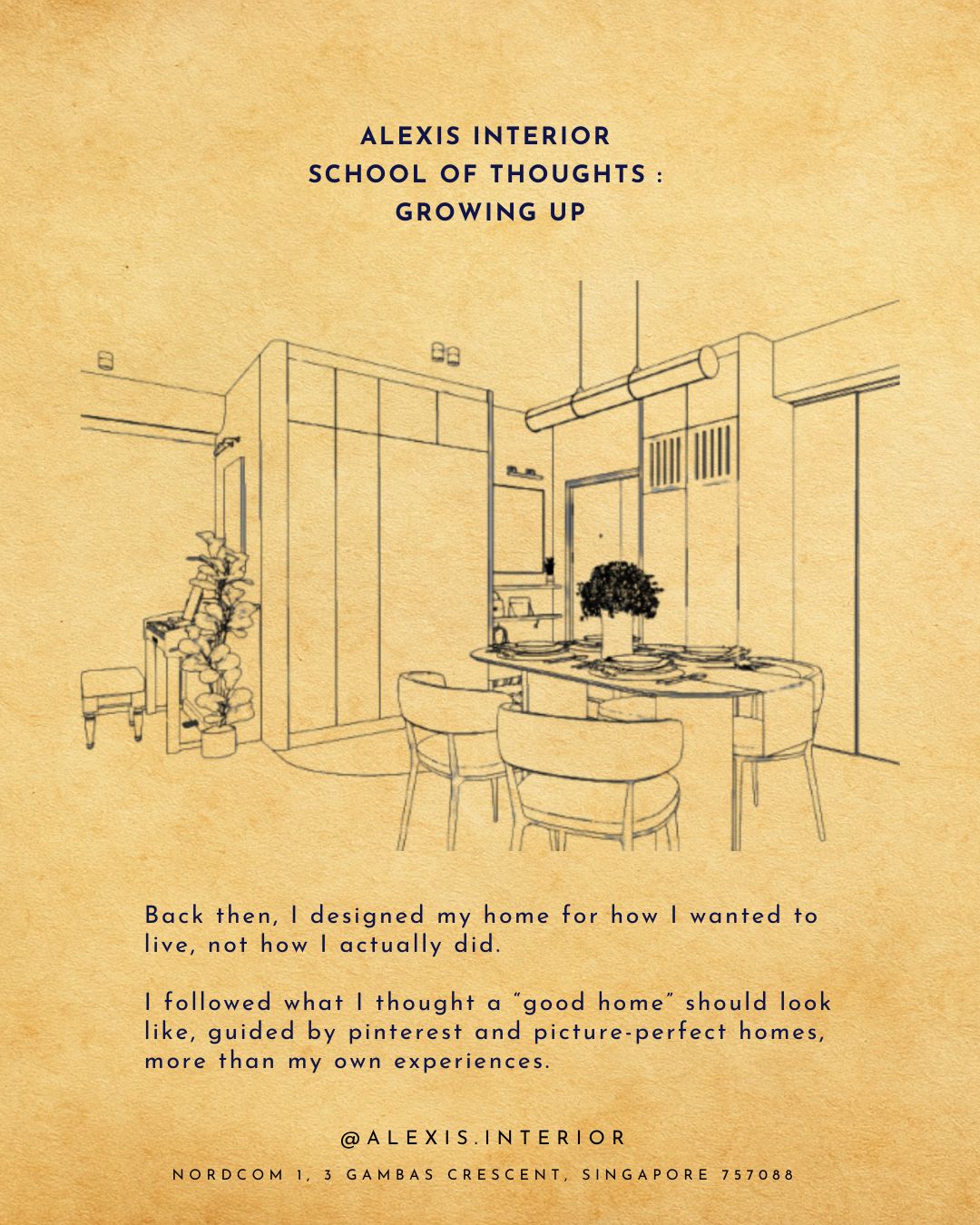
When I first designed my home, I truly believed I understood how I wanted to live. I had collected countless references from Pinterest, saved beautifully curated interiors on Instagram, and studied spaces that looked calm, refined and perfectly composed. They felt aspirational. They felt like the kind of life I wanted to step into. So I designed for that version of myself — the one who wakes up early, keeps surfaces clear, hosts elegantly, and maintains a sense of order effortlessly.
But over time, I began to see the quiet gap between how I imagined I would live and how I actually did.
I realised I had designed more for aspiration than observation. I had not fully considered my real routines — where I instinctively drop my bag when I walk in, how work expands onto the dining table, how some evenings I crave a quiet enclosed corner instead of an open-concept showcase. I had followed what I thought a “good home” should look like, guided more by aesthetic ideals than lived experience.
And that is something many homeowners only discover after moving in: a home is not a photoshoot. It is a behavioural ecosystem.
Interior design, at its core, is not just about composition and proportion. It is about psychology. It is about understanding energy, habits, stress patterns and daily rhythms. A well-designed space does not simply impress visually; it reduces friction. It supports how you move, how you rest, how you think and how you recover.
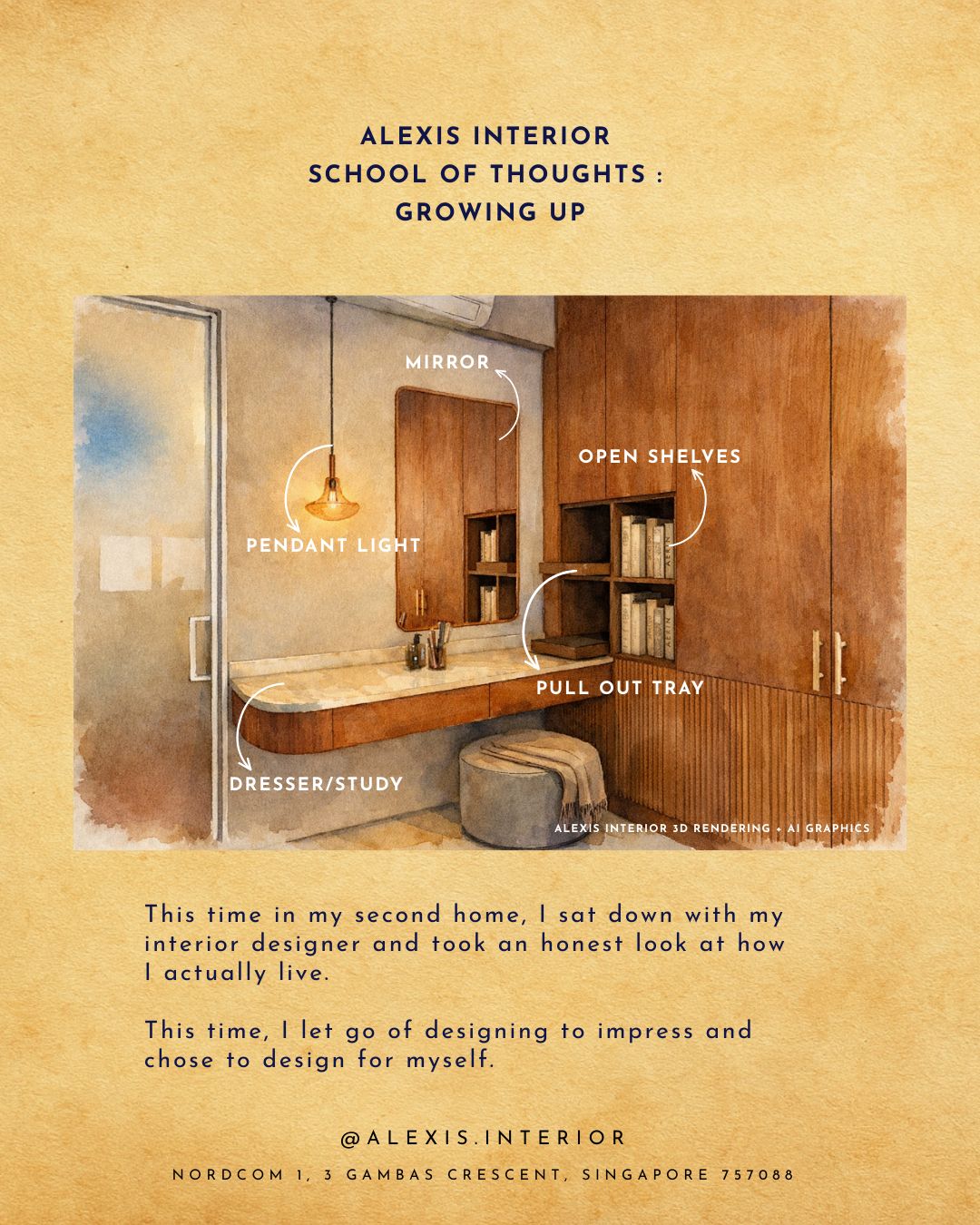
When I began designing my second home, I approached the process differently. Instead of starting with colours or materials, I started with questions. What do I actually do when I reach home? Where do I naturally place my keys? Do I truly cook often enough to justify that large island? When I feel overwhelmed, where do I retreat? What part of the day feels the most chaotic, and how can design soften that?
These questions shifted everything.
I stopped designing to impress. I stopped imagining how the space would look to visitors. I stopped thinking about how it would photograph. Instead, I began designing for maintenance ease, for emotional comfort, for practical storage, for the version of me that exists on ordinary Tuesdays — not just special occasions.
The result was not louder or trendier. It was calmer. Softer. More aligned.
Through this journey, I have come to understand that feeling less than one hundred percent satisfied with a past home does not mean you failed. Your first home reflects who you were at that time — your financial capacity then, your exposure then, your priorities then, your emotional needs then. A home is not proof that you got everything right from the very beginning. It is proof that you made the best decisions you could with the awareness you had.
And honestly, that is beautiful.
We grow. Our lifestyles shift. A newly married couple lives differently from a family with children. An entrepreneur who works late operates differently from someone with a fixed schedule. As our internal world evolves, our spatial needs inevitably change as well.
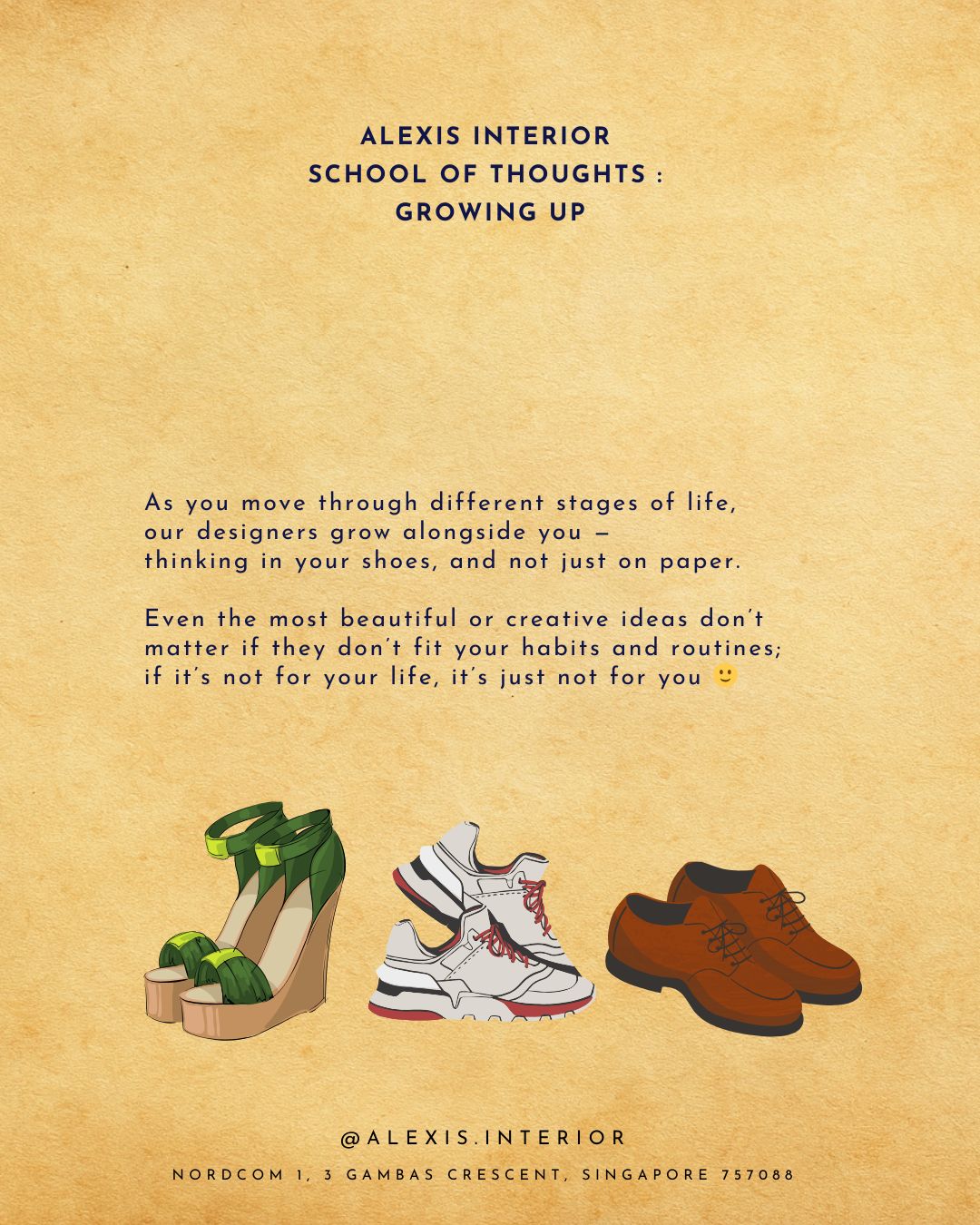
Design should grow alongside you.
Even the most beautiful or creative idea loses its value if it does not support your habits. If the open shelf becomes visual clutter, if the walk-in wardrobe creates stress instead of calm, if the dining table becomes a perpetual workstation, the issue is not that the design was wrong — it is that it was misaligned with your life. If it is not designed for your routines, it is simply not designed for you.
So the real question is this: does your home work for you?
Not for your guests. Not for social media. Not for validation. But for you — in your most ordinary, unfiltered moments.
It is perfectly acceptable if the answer is not entirely. Awareness is the beginning of better design. A home is not a fixed statement carved in stone. It is a living reflection of who you are becoming.
And sometimes, the most mature thing you can say is, “I would do it differently now.”
That is not regret. That is alignment.
Do not settle for standard. Redesign smarter — not louder, not trendier, but truer to the life you actually live.
– Anonymous Homeowner.